
hiring a cleaner ·
Recurring vs deep cleaning: what Spokane homes need
Recurring vs deep cleaning, explained by a Spokane crew cleaning homes since 2002: what each service covers, which one your house needs, and when to switch.
By Frontline Housekeeping Plus

The recurring vs deep cleaning question comes up in almost every first call we take, and it is usually asked the wrong way around. People want to know which service is better. Neither one is better, because they are not competing with each other. A deep clean is a reset, and a recurring clean is upkeep. One brings a home back to a clean baseline, the other holds it there. We have cleaned Spokane homes since 2002, and the households that are happiest with us are the ones that understood that difference before they booked anything.
This guide walks through what each service actually includes, how to tell which one your house needs right now, and how the two fit together over a year. If you already know you want ongoing help and just need to choose a frequency, skip ahead to the cadence section. If you are staring at a house that got away from you over a busy spring, start at the top.

What a deep clean actually covers
A deep clean is the top-to-bottom version. It includes everything a routine visit covers, then adds the accumulated work: the parts of a home that collect grime slowly enough that nobody notices until the light hits them right.
In practice, that means the crew spends real time on:
- Baseboards, trim, and door frames, wiped rather than dusted, including the tops of casings where Spokane’s fine summer dust settles heaviest.
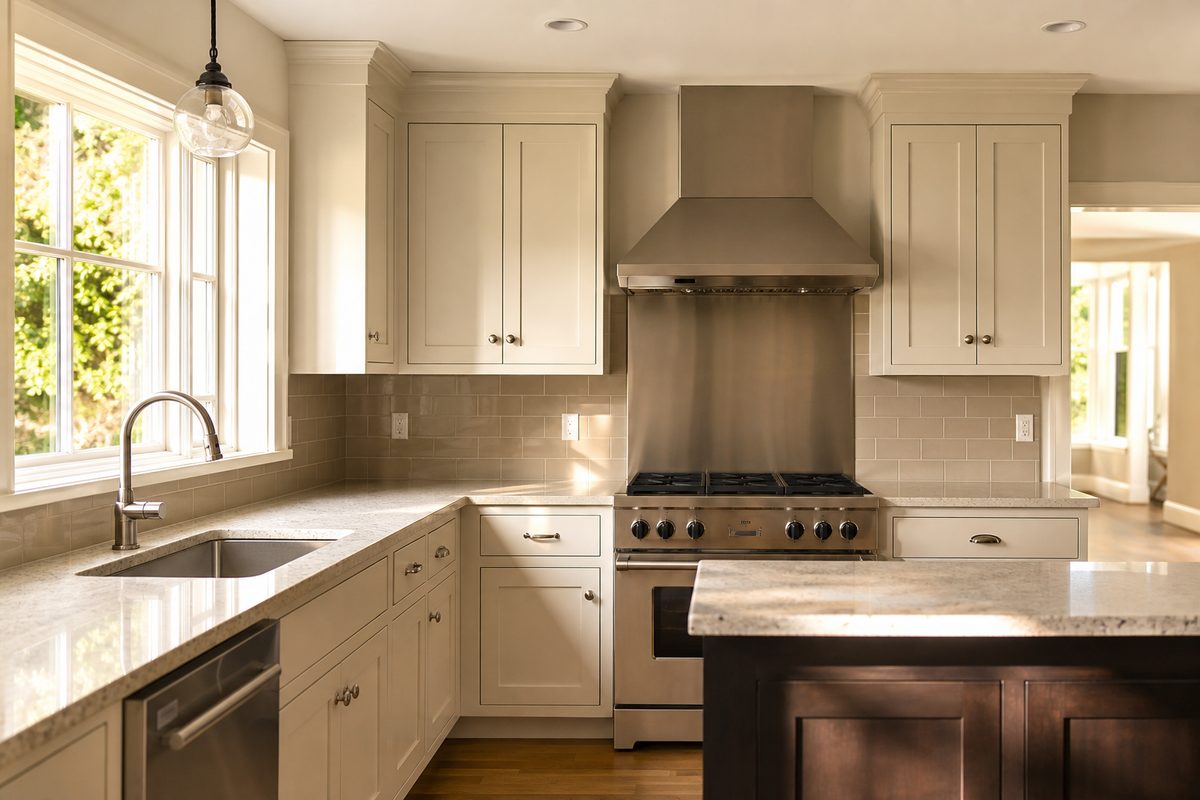
- Kitchen buildup, meaning cabinet faces and their greasy upper edges, the range hood, backsplash grout, and the sides and top of the refrigerator.
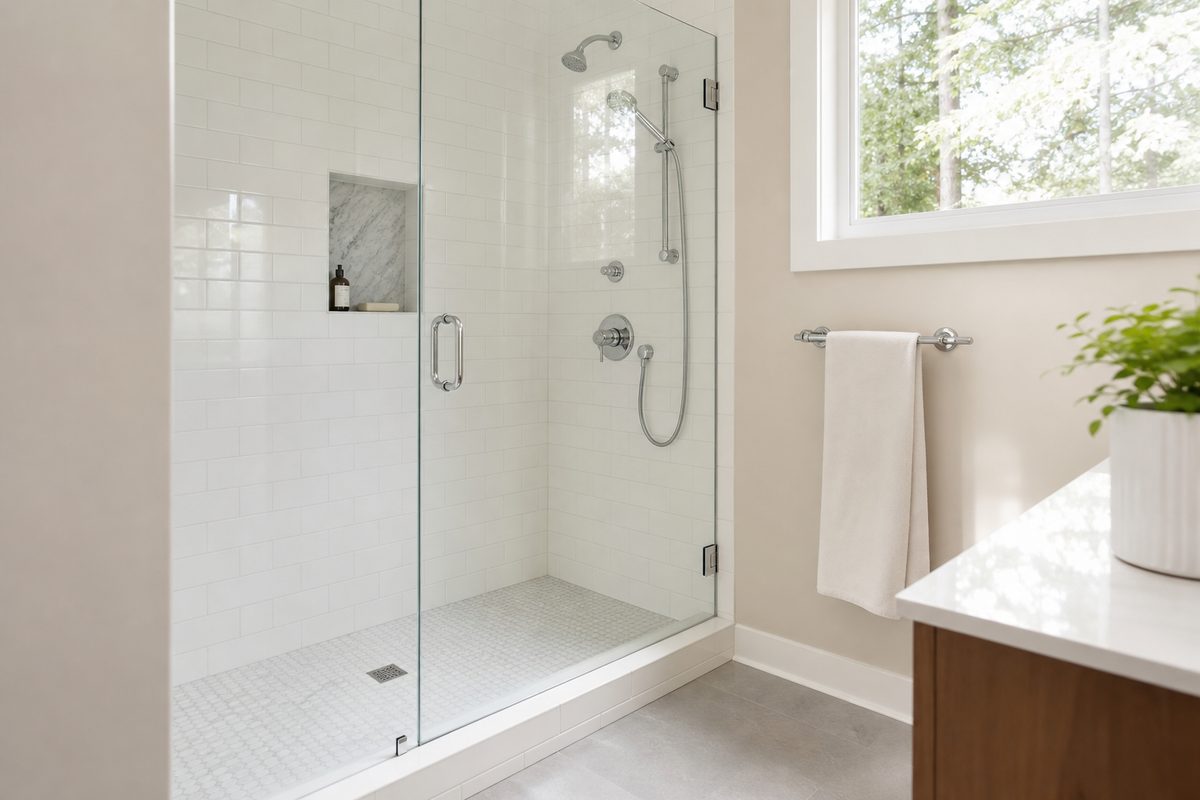
- Bathroom mineral deposits, which in this area is a job of its own. Our water leaves scale on glass, fixtures, and tile that a routine wipe will not touch. It is one of the most common complaints we hear in this area.
- Behind and under things, meaning furniture pulled out where it can be moved, under beds, behind the toilet, and along the edges of rooms where vacuum passes normally stop short.
- Verticals and overheads, including light fixtures, ceiling fan blades, vent covers, blinds, window sills and tracks, and switch plates.
The point of all of that is not to make the house look better for a day. It is to remove the backlog so that the next visit, and every visit after it, starts from zero instead of from a year of buildup. Our deep cleaning service page lists the full scope, and the deep clean checklist walks through it room by room if you would rather tackle it yourself.
What a recurring clean covers
A recurring clean is what most people picture when they think of a house cleaner. On a set schedule, the same crew comes through and handles the work that regenerates: kitchens and bathrooms cleaned and sanitized, floors vacuumed and mopped, surfaces dusted, mirrors and glass done, beds made, trash out.
The scope sounds smaller, and on any single visit it is. What makes it work is repetition. Nothing gets a chance to build up, so nothing needs to be dug out. The bathroom that gets cleaned every two weeks never develops the soap scum layer that takes an hour to break down. The kitchen that gets wiped on a schedule never grows the film of cooking residue on the cabinet above the stove.
There is a health argument here too, not just an appearance one. The CDC recommends cleaning high-touch surfaces regularly, including light switches, doorknobs, and countertops, and notes that cleaning with soap or detergent removes most germs on its own. “Regularly” is the operative word: a single heroic scrub in March does nothing for the doorknobs in June. That is exactly the gap a recurring rotation fills.
Kat and Bailey did an awesome job cleaning. We have them clean every other week. Always turn out great. Thank you Frontline
Which one does your home need right now
Here is the honest test we use on the phone. Walk into your kitchen and look at the top edge of the cabinet doors, then the grout behind the sink, then the baseboard where the floor meets the wall. If those three spots look about how you would want a guest to see them, your home is at baseline and a recurring rotation will hold it there. If any of them make you wince, there is a backlog, and a deep clean is the efficient way to clear it.
A few situations point clearly one way:
Start with a deep clean if you have never had professional cleaning, it has been more than six months or so since the house had a serious top-to-bottom, you just finished a renovation, you are moving into or out of a place, or something disruptive happened. A heavy wildfire smoke season or a long stretch of winter mud, snow, and road salt both leave a residue load that routine visits are not scoped to remove.
Go straight to recurring if you have been keeping up yourself and simply want the time back, or you are switching from another service that had you in good shape. There is no rule that says everyone must buy a reset first. If the house is genuinely at baseline, paying for a reset it does not need is wasted money.
Why the reset usually comes first
The most common friction we see is a home that books recurring visits without the reset, and then wonders why the results feel incomplete after two or three cleans.
What happens is simple arithmetic. A recurring visit is scoped to maintain, so it has a set amount of time in it. If the crew arrives to a year of buildup, they have to choose: either spend the visit on one bathroom’s mineral deposits and leave the rest of the house untouched, or do the maintenance pass and leave the buildup. Neither one is satisfying. Spread across four or five visits, the house does eventually get there, but it takes longer and costs more in total than one honest reset would have.
The reset also makes the recurring visits noticeably better. Once the baseboards are clean, keeping them clean is a two-minute pass. Once the shower glass is descaled, keeping it clear is a wipe. The crew’s time on every future visit goes toward detail rather than excavation, which is why long-running clients tend to say the cleans got better over the first few months rather than settling into sameness.
Choosing a recurring frequency
Once you are on maintenance, the next question is how often. The instinct is to decide by square footage, but that is the wrong variable. A large, quiet house with two adults and no pets can go a month comfortably. A smaller house with three kids, a dog, and a mudroom that faces a gravel alley needs weekly attention. What actually drives frequency is how fast the home generates mess.
- Weekly suits busy households, homes with kids or multiple pets, anyone who entertains often, and people who want the house to simply never be a project. This is also the right choice if the mess accumulating between visits is the thing causing stress, rather than the cleaning itself.
- Every other week is the most common choice by a wide margin, and it is the natural fit for most Spokane homes. It is frequent enough that nothing builds up and infrequent enough that each visit is meaningful.
- Monthly works for smaller households, couples without pets, homes where nobody is around much during the day, and people who handle the light upkeep themselves and want the thorough pass handled for them.
- Quarterly or seasonal is less maintenance than reset, and it works well for second homes, low-traffic houses, or as a standing deep clean at the turn of each season. It suits homes where the year, rather than the week, sets the rhythm.
One local factor worth weighing: our dry, windy summers and long wildfire season put more airborne particulate into Spokane homes than a wetter climate would. The EPA’s guidance on improving indoor air quality points to source control as the most effective approach, and regular removal of settled dust is exactly that. If your household includes someone with allergies or asthma, that alone can be the argument for every other week over monthly. Steady removal of settled dust does more for a household like that than any single deep pass.
How the two fit together across a year
The pattern that works for most homes is straightforward: one reset, then steady maintenance, with an occasional deeper pass when the calendar or the weather calls for it.
That usually looks like a deep clean to start, then a recurring rotation at whatever frequency fits, then a heavier seasonal clean once or twice a year. Spring is the common one, after the house has been closed up through a Spokane winter. Fall is the other, before everything shuts again. Some households add one before holiday hosting. If you are on a weekly or every-other-week rotation, you may never need another full reset, because the maintenance is doing that job continuously.
You are also not locked in. Frequency should follow the household, and households change. Families move to weekly when a baby arrives and back to monthly when the kids leave. People go seasonal during a stretch of travel and return to every other week after. Tell us what changed and we will adjust the schedule.
Questions we hear on the first call
What is the difference between deep cleaning and regular cleaning?
A deep clean is a reset that removes built-up grime from places routine cleaning does not reach: baseboards, grout, behind appliances, light fixtures, window tracks, and mineral scale. A regular or recurring clean is maintenance that holds a home at that clean baseline, covering kitchens, bathrooms, floors, dusting, and glass on a set schedule. The deep clean gets you there, the recurring clean keeps you there.
How often should you deep clean your house?
It depends on what your maintenance looks like in between. A home on a weekly or every-other-week rotation may never need a full reset again, because the buildup never gets a chance to start. A home cleaned monthly or handled by the household itself usually benefits from a deeper pass once or twice a year, most often in spring and fall. If you are seeing grime in the places routine cleaning skips, that is your answer regardless of the calendar.
Do I need a deep clean before starting recurring service?
Usually, but not always. If it has been more than roughly six months since a serious top-to-bottom, or you have never had professional cleaning, the reset makes every visit after it better and cheaper in total. If your home is already at baseline, we will tell you so and start you straight on the rotation. We would rather scope it honestly at the consultation than sell you something the house does not need.
How long does a deep clean take compared to a regular clean?
Considerably longer, often several times the length of a maintenance visit, because the crew is removing accumulated buildup rather than fresh mess. The exact time depends on the size of the home, its condition, how many bathrooms it has, and whether pets are in the picture. We give you a time estimate in writing before the visit so nothing about the day is a surprise.
Is recurring cleaning or a one-time deep clean a better value?
They answer different questions, so the comparison does not quite work. A one-time deep clean is the right call when you need a reset for a specific reason: a move, a renovation, a hosting event, or a house that got away from you. A recurring rotation is the better value when the goal is a home that stays clean without you thinking about it, because each visit is shorter and the results compound. Many households use both, starting with the reset and continuing on a rotation.
Not sure which one you need
That is a completely normal place to be, and it is the easiest thing in the world to sort out in person. We have been doing this in Spokane since 2002, which means we have walked into a lot of homes where the owner was sure they needed a full reset and did not, and plenty where the opposite was true.
If you want to compare notes before you call, our guide to what to expect from a first cleaning covers how the visit itself goes. If you already know you want ongoing help, the maid service and house cleaning pages lay out the recurring scope.
Anywhere in Spokane and the surrounding area, tell us about your home and we will send a written estimate within a business day, with a free in-home consultation if you would like one. We will tell you which service your house actually needs, even when it is the smaller one.